
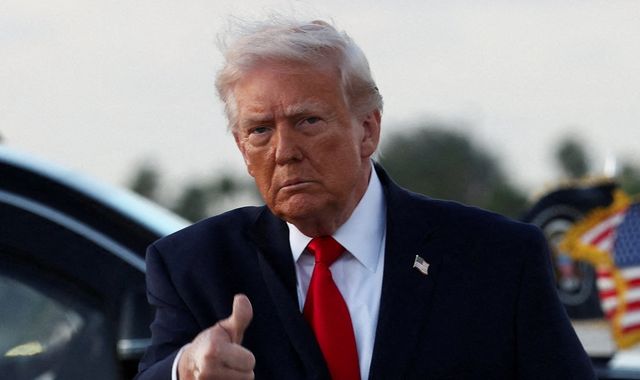
US vice president JD Vance, who led the US delegation last time, is not going, but Mr Trump’s press secretary said he remains “deeply involved” and “is on standby” to go “if we feel it’s a necessary use of his time”.
“We’re hopeful that it will be a productive conversation and hopefully move the ball forward to a deal,” Karoline Leavitt said in an interview with Fox News.
Here’s everything we know about the talks.
Who is involved?
Mr Trump’s special envoy Mr Witkoff and his son-in-law and former special adviser Mr Kushner will meet Iran’s foreign minister Abbas Araghchi.
“We’re hopeful that it will be a productive conversation and hopefully move the ball forward to a deal,” Ms Leavitt said.
She said Mr Trump decided to send them to Pakistan “to hear the Iranians out,” adding: “We’ve certainly seen some progress from the Iranian side in the last couple of days.”
The pair previously negotiated a Gaza ceasefire deal and are involved in Russia-Ukraine talks.
On Friday, Mr Araghchi wrote on X to say he was on his way to Pakistan, Oman and Russia on a trip focused on “bilateral matters and regional developments”.
He and the two Trump envoys previously held hours of indirect talks in Geneva over Tehran’s nuclear programme on 27 February, which ended without a deal. Israel and the US started the war against Iran the following day.
Read more:
What is Iran’s 10-point peace plan – and what has Trump said?
Talks break down as both sides play hardball – what happens next?
What do we know about the state of negotiations?
Earlier this week, Mr Trump announced an indefinite extension of the US ceasefire with Iran.
The move has so far failed to lower tensions in the Strait of Hormuz, a key waterway through which a fifth of the world’s oil and natural gas is shipped.
Iran has maintained its hold on traffic through the strait, having attacked three ships earlier this week, while the US has imposed a blockade on Iranian ports and Mr Trump had ordered the military to “shoot and kill” small Iranian boats which could be placing mines.
The first round of direct talks in Pakistan earlier this month, the highest-level US-Iran talks since the 1979 Islamic revolution, did not amount to much.
What do the different sides want?
Mr Trump has described a 10-point proposal from Iran as a “workable basis on which to negotiate”.
Israel and the US both want Iran’s missile capabilities to be significantly curbed. Tehran has said its formidable missile arsenal will not be the subject of negotiations.
One of Mr Trump’s key objectives since the start of the war has been the stipulation that Iran can never be allowed to develop a nuclear weapon.
However, Tehran says its 10-point peace plan includes Washington’s “acceptance of enrichment” of uranium for Tehran’s nuclear programme.
Iran also wants the withdrawal of US combat forces from the region.
Mr Trump has vowed to retain military assets in the Middle East until a peace deal is reached and warned of a major escalation in fighting if it failed to comply.
What is happening between Israel and Lebanon?
Iran had said stopping hostilities in Lebanon would be part of larger peace negotiations.
Israel and Lebanon agreed to implement a “cessation of hostilities” on 16 April for 10 days, according to a text of the deal released by the State Department.
Mr Trump has since announced that Israel and Lebanon had agreed to extend the ceasefire between Israel and Hezbollah by three weeks.
In a video released by his office on Friday, Israeli Prime Minister Benjamin Netanyahu celebrated “a process to achieve a historic peace between Israel and Lebanon”.
The deal said Lebanon’s government, with international support, would take “meaningful steps” to prevent Hezbollah and other groups from launching attacks on Israeli targets.
It also said Israel and Lebanon recognise the country’s security forces “as having exclusive responsibility for Lebanon’s sovereignty and national defence”, referencing a bid by the government since 2025 to disarm Hezbollah.
The deal does not require Israel to withdraw from southern Lebanon, where Israeli forces have been destroying villages and infrastructure after ordering residents south of the Litani River to leave.
What happened in the last round of talks?
Mr Vance said negotiations earlier this month finished without a deal after the Iranians refused to accept US terms to refrain from developing a nuclear weapon.
The discussions in Islamabad began a few days after the ceasefire was announced and as the war entered its seventh week.
“We were constantly in communication with the team because we were negotiating in good faith,” Mr Vance said.
“And we leave here, and we leave here with a very simple proposal, a method of understanding that is our final and best offer. We’ll see if the Iranians accept it.”