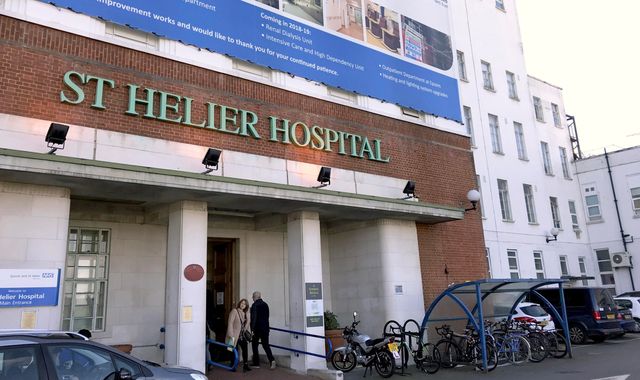
Dr Veronica Varney worked as a respiratory consultant at St Helier Hospital in Carshalton, in the borough of Sutton.
The NHS trust which runs the hospital had already established 42% of 216 patients she treated for interstitial lung disease (ILD) weren’t referred to specialists, 30% received no care at all, and 20% were not properly investigated diagnostically.
Instead of referring patients to specialist teams, the trust said she acted unilaterally and often provided outdated care that caused harm.
Concerns were first raised in 2019 and Dr Varney left the trust in 2023.
She was referred to the General Medical Council in September 2024 and restrictions were placed on her practice.
The Royal College of Physicians’ review published today was designed to gauge the extent of the harm she caused.
A representative for Dr Varney said she had no comment on the findings.
The report found “delays to or deviations from guidelines-based care potentially contributed to the patients’ irreversible lung damage, poor quality of life or premature death”,
It said there was “frequent variability in clinical history taking, delays in referrals of patients for MDT discussion and to tertiary centres, and inaccuracies in the reporting of diagnostic results”.
Out of 28 cases, the review said 12 had caused “severe clinical harm” (permanent or long term); three were graded as “death” as the patient wasn’t given access to treatments that can extend life; seven resulted in “moderate clinical harm” (short term); and one case was “low clinical harm”.
Dr Varney, referred to as “Dr X” in the report, is said to have given patients “non-evidence-based and off-label treatments” for lung disease, such as avoiding rapeseed oil and COVID vaccines, and “did not actively recommend approved therapies”.
She also allegedly showed “poor interpretation of lung function test results”, while “limited and inconsistent” use of expert multi-disciplinary teams “contributed to delays in diagnosis, decision making and access to timely treatment”.
The report also criticises health bosses at the trust between 2019 and 2022.
It claims they didn’t properly address concerns over Dr Varney due to factors including “strained relationships among clinical leads” and “poor escalation pathways”.
“A historical lack of integration between the St Helier and Epsom sites and tensions within the clinical leadership created a challenging environment for staff to raise and respond to concerns,” the review states.
It said recent changes in leadership had improved governance and team dynamics and “the current respiratory team is well-positioned to drive meaningful improvements”.
Dr Richard Jennings, chief medical officer for St George’s, Epsom and St Helier Hospital Group, offered “sincere apologies” to patients and families.
“The care they received fell far below what should have been given,” he said in a statement.
“While the Royal College of Physicians’ report makes it clear that patients were significantly harmed, it also expresses confidence in the changes we had already made to make the service safe, and we have accepted and acted on all of their recommendations.
“We have also contacted patients or their families to share the findings, apologise, and offer further support.”