The head of an international network of “zoo sadists” that filmed and distributed the torture and killing of monkeys has been jailed for more than three years.
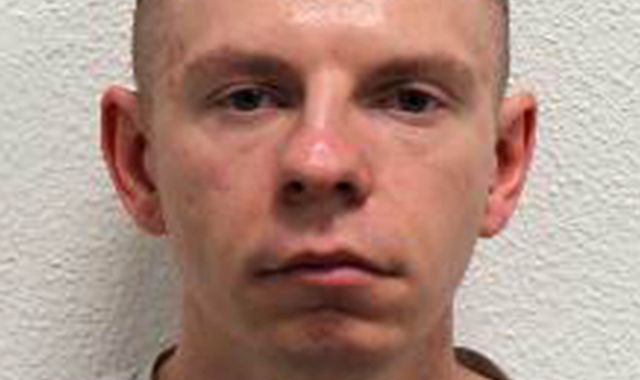
Judge Christopher Grout said that he had “never encountered such a horrific case of animal abuse in my life” when sentencing Bartosz Poklek, 30.
Poklek was found to have distributed “horrific” cruelty videos which sold for up to $500 (£378) each, and was sentenced to three years and three months in prison.
Woolwich Crown Court heard that he wrote scripts for how the animals should be mutilated, dismembered, and tortured, and directed the way the monkeys would be killed, including them being clubbed to death with a hammer.
‘Truly appalling’ abuse
The court heard that Poklek, from Bexley, London, played a leading role in the “monkey hate” online community, running chat groups and distributing thousands of “abuse on demand” videos and images.
Some of the monkeys were also dressed up as babies as they were violently attacked, sparking growing concerns that the animals are being used as “proxies” by people who want to view sadist abuse of children.
The judge said the abuse in the online community was “despicable”, adding: “It is no exaggeration to say that as a lawyer or as a judge I have never encountered such a horrific case of animal abuse in my life.
“The facts of the offending are truly appalling, likely to cause distress to anyone listening to or reading about them.
“There is a vile underground community who have a hatred of monkeys, particularly baby monkeys, and take pleasure in seeing such monkeys being tortured and killed.”
The judge said Poklek would be set free after serving around a third of his prison sentence and called on parliament to consider tougher penalties for animal abuse.
Such crimes currently have a five-year maximum sentence.
“If ever there was a case that demonstrates that the statutory maximum for animal cruelty is too low, this is it”, he said.
The ‘zoo sadist’ network
The court heard that the abuse videos were filmed in southeast Asia, where macaque monkeys are subjected to torture on camera for viewers online.
So-called “zoo sadists” are recruited to the network after showing an interest in animal abuse material posted on YouTube, Facebook, and TikTok, the judge said, before being invited to more secure platforms like Discord and Telegram.
He added that some users paid to “adopt” a monkey so they could direct how the torture took place, and those involved in the network could send in suggestions for the abuse.
Prosecutor Alex Kettle-Williams told the court Poklek styled himself as “BP” online, ran a chat group titled “BP empire”, and was “a controlling figure in what is known as the ‘monkey hate community'”.
She said police uncovered evidence that Poklek had requested the killing of a stump-tailed monkey, drafted scripts of how the videos would be made, and made repeated requests for death by hammer.
One example of the abuse, the prosecutor said, was a 39-minute video of a baby monkey being tortured by being plied with alcohol, set on fire, and bound with zip ties.
In a second video, lasting almost half an hour, another baby monkey was mutilated with scissors while clearly still alive.
Ms Kettle-Williams said police had also gathered evidence that monkeys were sometimes dressed in bonnets and nappies, and fed with a baby’s milk bottle, noting concern that monkeys are being seen as “proxy infants” by users interested in violent child abuse.
Alexia Nicol, representing Poklek, told the court he “finds it difficult to explain how he became involved in this”.
More from Sky News:
Man City boss insists club can win appeal
Drought declared in Yorkshire
The court heard that Poklek was captured after attempting to access documents from a monkey torture criminal case in the US.
Poklek subsequently admitted to running a “large-scale monkey torture ring” between June 2023 and September 2025.
He also pleaded guilty to publishing obscene videos for gain, as well as possession of indecent images of children and possession of ketamine.
The investigation involved British police from the National Wildlife Crime Unit, the Metropolitan Police, West Mercia Police, and officials from the US Homeland Security Investigations and the US Fish and Wildlife Service.