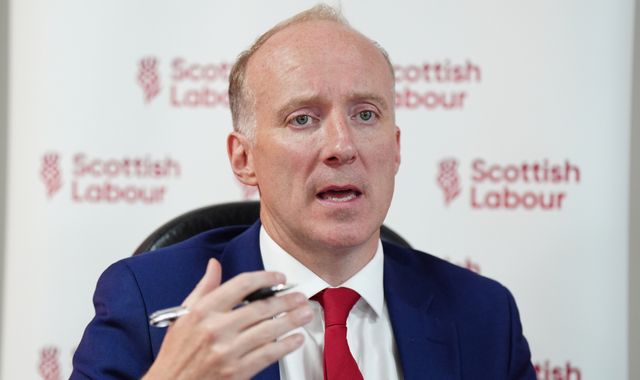
The North East Scotland MSP, who has been the party’s finance spokesperson, defeated South Scotland MSP Joe Fagan in the contest.
Mr Marra replaces Anas Sarwar, who stood down from the top job after the party suffered its worst result in the history of devolution in May’s Scottish parliament elections.
Mr Sawar quit his role in July and joined the House of Lords, becoming a trade minister in Andy Burnham’s government in Westminster.
Voting in the contest opened on 28 August, with Mr Marra and Mr Fagan taking part in a series of hustings across the country in a bid to woo party members.
Mr Marra has insisted Scottish Labour is still a “significant force” in Scottish politics despite this year’s election results.
The number of MSPs elected for the party has declined in every Holyrood election since devolution, falling to just 17 after May’s vote. The result meant it was the joint second-largest party, tied with Reform UK.
On the question of Scottish independence, Mr Marra has said there is a “route” to a second referendum through “creating a settled will of the Scottish people”.
But he said comparing Scotland to Northern Ireland – which has a legal trigger for a referendum – was “dangerous”.
Earlier this month, the prime minister said a vote on Scottish independence could be held if there was a “clear consensus” north of the border for it, but a letter later sent to First Minister John Swinney said a referendum remained “off limits”.
SNP leader Mr Swinney has pushed for a referendum to be held within the next five years.
This week he met the leaders of Plaid Cymru and Sinn Fein during what they described as a “landmark” summit aimed at pressuring Downing Street into holding independence referendums.
Ahead of polls closing in the leadership race on Thursday, Mr Marra said he would practice what he described as “open-door politics” both within the party and Holyrood.
In engaging with party members, Mr Marra has said he plans to hold a series of regional meetings, where he will, effectively, take his lead from those on the ground.
But he also said he would be open to working with other parties and the Scottish government.
While Mr Marra claimed he has always been willing to work with the government, he was part of the Labour group which chose to abstain on the budget vote in each of the past two years, effectively waving through the government’s plans without gaining anything in return.
Also, he claimed that for both the country and the party, education has been less of a priority than it should be, as he pledged to put it “at the heart of our politics”.