The chairman, Lord Hughes, found there were “failings” in the management of Sergei Skripal, 74, who was a member of Russian military intelligence, the GRU, before coming to the UK in 2010 on a prisoner exchange after being convicted of spying for Britain.
But he found the assessment that he wasn’t at “significant risk” of assassination was not “unreasonable” at the time of the attack in Salisbury on 4 March 2018, which could only have been avoided by hiding him with a completely new identity.
Mr Skripal and his daughter Yulia, 41, who was also poisoned, were left seriously ill, along with then police officer Nick Bailey, who was sent to search their home, but they all survived.
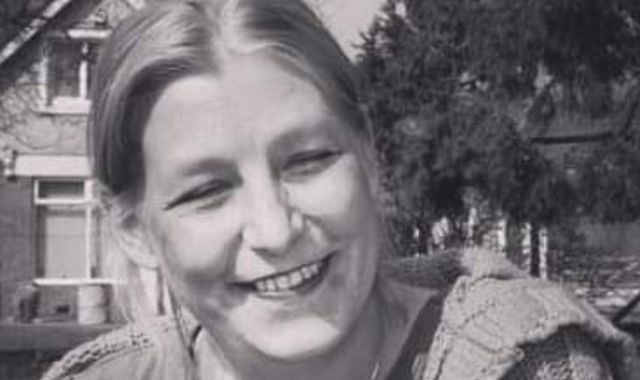
Dawn Sturgess, 44, died on 8 July, just over a week after unwittingly spraying herself with novichok given to her by her partner, Charlie Rowley, 52, in a perfume bottle in nearby Amesbury on 30 June 2018. Mr Rowley was left seriously ill but survived.
In his 174-page report, following last year’s seven-week inquiry, costing more than £8m, former Supreme Court judge Lord Hughes said she received “entirely appropriate” medical care but her condition was “unsurvivable” from a very early stage.
The inquiry found GRU officers using the aliases Alexander Petrov, 46, and Ruslan Boshirov, 47, had brought the Nina Ricci bottle containing the novichok to Salisbury after arriving in London from Moscow with a third agent known as Sergey Fedotov to kill Mr Skripal on 2 March.
The report said it was likely the same bottle Petrov and Boshirov used to apply the military-grade nerve agent to the handle of Mr Skripal’s front door before it was “recklessly discarded”.
“They can have had no regard to the hazard thus created, of the death of, or serious injury to, an uncountable number of innocent people,” it said.
It is “impossible to say” where Mr Rowley found the bottle, but was likely within a few days of it being abandoned on 4 March, meaning there is “clear causative link” with the death of Ms Sturgess.
Lord Hughes said he was sure the three GRU agents “were acting on instructions”, adding: “I have concluded that the operation to assassinate Sergei Skripal must have been authorised at the highest level, by President Putin.
“I therefore conclude that those involved in the assassination attempt (not only Petrov, Boshirov and Fedotov, but also those who sent them, and anyone else giving authorisation or knowing assistance in Russia or elsewhere) were morally responsible for Dawn Sturgess’s death,” he said.
He said deploying the “highly toxic nerve agent in a busy city centre was an astonishingly reckless act” with an “entirely foreseeable” risk that others beyond the intended target would be killed or injured.
The inquiry heard a total of 87 people presented at A&E.
Lord Hughes said there was a decision taken not to issue advice to the public not to pick anything up which they hadn’t dropped, which was a “reasonable conclusion” at the time.
He also said there had been no need for training beyond specialist medics before the “completely unexpected use of a nerve agent in an English city”.
After the initial attack, wider training was “appropriate” and was given but should have been more widely circulated.
The Russian Embassy has firmly denied any connection between Russia and the attack on the Skripals.
But the chairman dismissed Russia’s explanation that the Salisbury and Amesbury poisonings were the result of a scheme devised by the UK authorities to blame Russia, and the claims of Petrov and Borisov in a television interview that they were sightseeing.
He said the evidence of a Russian state attack was “overwhelming” and was designed not only as a revenge attack against Mr Skripal, but amounted to a “public statement” that Russia “will act decisively in its own interests”.
Lord Hughes found “some features of the management” of Mr Skripal “could and should have been improved”, including insufficient regular written risk assessments.
Bu although there was “inevitably” some risk of harm at Russia’s hands the analysis that it was not likely was “reasonable”, he said.
“There is no sufficient basis for concluding that there ought to have been assessed to be an enhanced risk to him of lethal attack on British soil, such as to call for security measures,” such as living under a new identity or at a secret address, the chairman said.
He added that CCTV cameras, alarms or hidden bugs inside Mr Skripal’s house might have been possible but wouldn’t have prevented the “professionally mounted attack with a nerve agent”.
Sky News has approached the Russian Embassy for comment on the report.
This breaking news story is being updated and more details will be published shortly.
Please refresh the page for the latest version.
You can receive breaking news alerts on a smartphone or tablet via the Sky News app. You can also follow us on WhatsApp and subscribe to our YouTube channel to keep up with the latest news.