
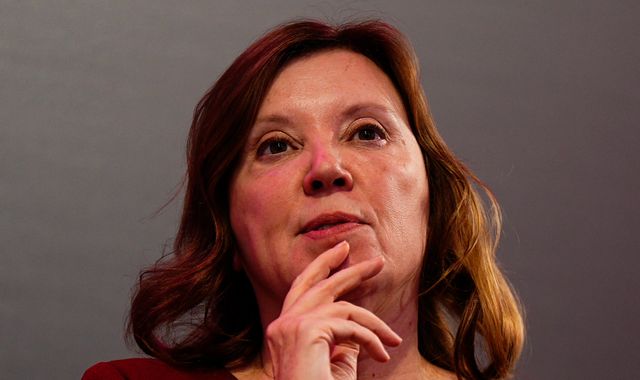
In a new report, Dame Rachel de Souza said the current process for referring to Prevent “risks missing opportunities” and called for a “stronger safeguarding response, particularly for children who are fixated with violence but have no identified extremist ideology”.
It comes after Southport attacker Axel Rudakubana had been referred to Prevent three times, but his case was closed over a lack of clear ideology.
Rudakubana is serving a 52-year sentence after fatally stabbing three girls – Alice da Silva Aguiar, Bebe King and Elsie Dot Stancombe – at a Taylor Swift-themed dance class in Southport in 2024.
The chairman of the inquiry into that attack has previously said officers were “hampered” by a lack of clarity on whether they should take someone on who demonstrated signs of being fixated on violence but without adherence to a particular ideology.
Most Prevent referrals don’t go through programme
Analysis by Dame Rachel’s office suggested seven in 10 (71%) referrals to Prevent involved children who did not have a clear ideology, with many linked to exposure to harmful content online such as videos of violence, discussion of weapons and sharing of extreme pornography.
Of the total Prevent referrals for children between April 2024 and March 2025, 79% were closed without progressing through the programme.
In this time period, almost 60% of Prevent referrals came from education, while police accounted for 20% and local authorities 11%.
But the commissioner’s office found that at least 65% of referrals from education providers were referred back to education on closing, the vast majority of which (93%) had not progressed any further through the Prevent programme.
Her report said: “This highlights that there is a group of children which professionals are greatly concerned about and seeking support for, but are finding closed doors and dead ends.”
Dame Rachel said: “A referral should be the start of understanding a child’s individual circumstances, not the end of the process. When a child does not progress through Prevent, we must be confident other services are there to understand and meet their needs.
“Simply returning children to services that made the referral, without a clear understanding of what is driving their behaviour or who will be responsible for meeting their needs, risks missing opportunities to provide the right support children desperately need.
“We need a stronger safeguarding response, particularly for children who are fixated with violence but have no identified extremist ideology.
“Professionals working with children need the expertise and support to identify children’s needs and behaviours, intervene early and provide appropriate interventions.”
Read more from Sky News:
Five teenagers dead in car crash
Stourbridge residents return home to assess damage
A government spokesperson said: “We are committed to ensuring all children are safe from radicalisation, and Prevent plays a crucial role in this, moving more than 6,000 people away from violent ideologies since 2015.
“Every Prevent referral is assessed thoroughly by experts. If it’s determined a person is not at risk of being drawn into terrorism, it is right they are supported by other, more appropriate services.
“We thank the Children’s Commissioner for her report. We are reviewing it alongside our work in response to the Southport Inquiry – including developing further options to manage those fascinated with extreme violence.”